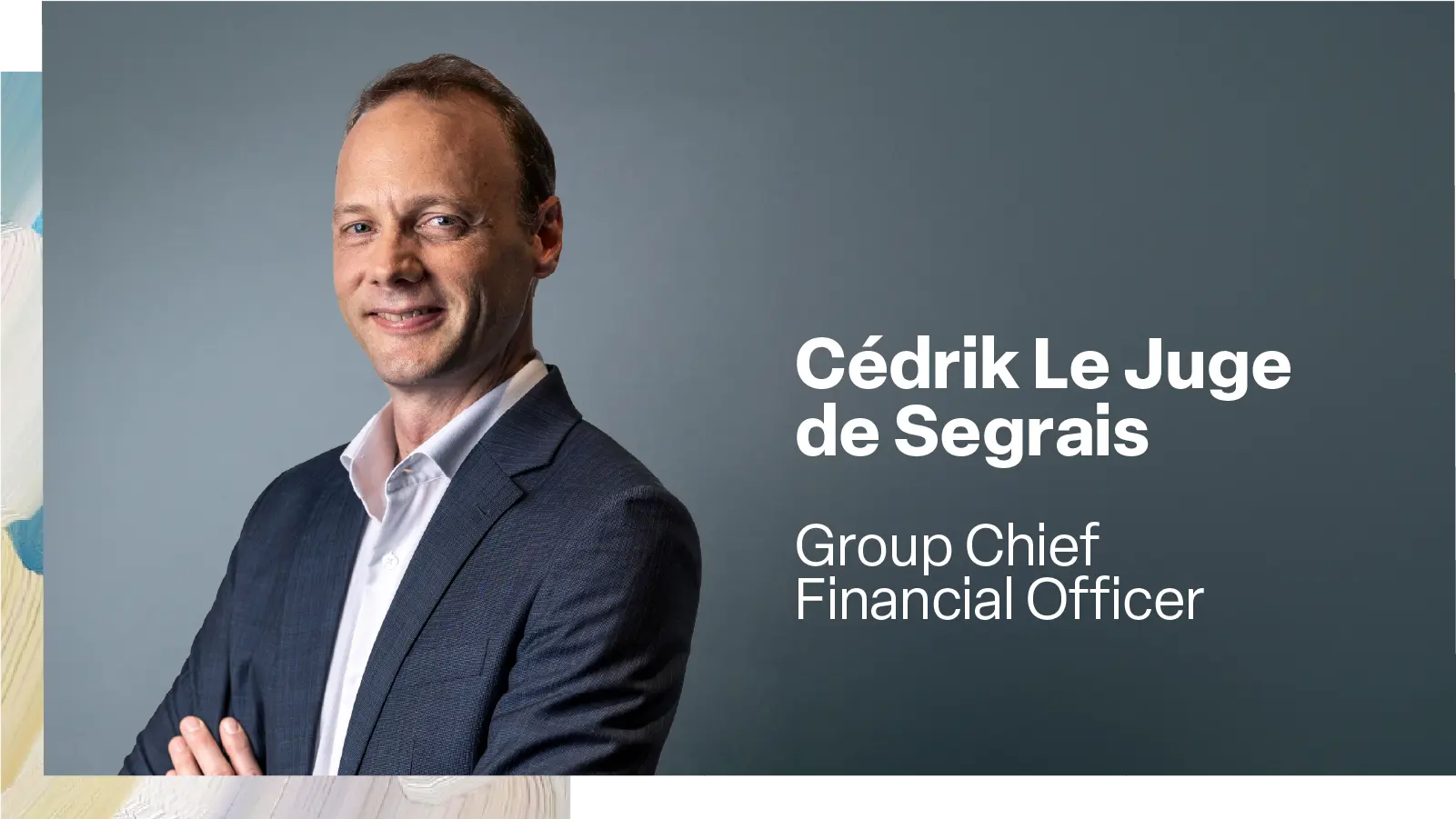
Cédrik Le Juge de Segrais, Group Chief Financial Officer of IBL Group, says the group is planning for 2026 less around a single macro call than around portfolio structure, arguing that geographic and sector diversification has become the primary hedge against volatility. With around 54% of revenue and 72% of growth generated outside Mauritius, he said IBL is structurally less exposed to a shock in any one market, while its core activities – retail, consumer goods, healthcare distribution, industrials, services and logistics – sit in areas of “structural demand” that are typically less sensitive to short-term swings. In that context, he said inflation and exchange rates are the variables with the biggest impact on earnings and cash flow, while interest-rate exposure has been reduced at holding level following the group’s partial sale of AfrAsia Bank, which he said “significantly reduced” IBL’s US-dollar debt exposure.
Our financial planning supports IBL’s long-term ambition to build strong, resilient businesses that improve daily life and drive economic progress across the Indian Ocean region. The key point about the Group today is the inherent resilience created by our broad geographic and sector diversification. Rather than rely on a single macro forecast, our 2026 plan leverages the strength of our portfolio. With around 54 % of revenue and 72 % of growth generated outside Mauritius, we are less exposed to shocks in any one market or sector.
Most of our businesses operate areas of structural demand – retail, consumer goods, healthcare distribution, industrials, services and logistics – which are less sensitive to short-term macro trends. This gives us visibility and allows us to benefit from secular growth drivers.
Among the variables listed, inflation and exchange rates have the greatest impact on earnings and cash flow. Interest rates matter, but depend on where we raise funding, and our partial sale of AfrAsia Bank this year has significantly reduced our USD debt exposure.
IBL has invested roughly USD 380 million in the region over the past four to five years, funded entirely through internal cash generation and targeted debt raising. The Group’s current leverage of 3.8x net debt to EBITDA is manageable for a diversified portfolio supported by strong operational cash flows. The AfrAsia transaction generated USD 117 million, allowing us to meaningfully reduce USD debt at the holding level and improve our funding profile.
For 2026 and beyond, we plan to continue gradual deleveraging and actively manage the portfolio, exiting non-core assets at attractive valuations while retaining flexibility to pursue highly selective growth aligned with long-term strategy.
A second priority is rebalancing debt within the Group. We are reducing debt raised at IBL Ltd and financing closer to operating assets, often in their functional currencies. Recent transactions in Réunion and the Seychelles illustrate this approach.
Our objective is a balanced capital structure that supports resilience and selective regional growth.
A disciplined capital structure is essential to protect the Group through cycles and to invest steadily where we create the most value for the communities we serve.
With the first phase of our Beyond Borders strategy largely complete, our focus is now on integration, consolidation and performance, with core businesses remaining the priority. We have built critical mass in several clusters, allowing us to pursue organic or greenfield growth with minimum capital outlay and a strong understanding of the local context. That is our “local, internationally” approach.
We continue to expand organically in our key markets. For example, we plan to continue store openings for Naivas in Kenya and Winners in Mauritius, and in 2026 will start the bottling and distribution of Coca-Cola products in Réunion. At the same time, some of our Mauritian businesses are starting to pursue organic growth opportunities abroad, such as BrandActiv in FMCG distribution in Kenya and Réunion. These expansions take place in segments where demand is solid and where we have competitive strengths.
We remain open to regional expansion and bolt-on acquisitions but with a very selective and disciplined approach. Opportunities must demonstrate strategic fit, operational alignment and clear value creation. In areas such as financial services, we prioritise organic development, with targeted moves only if the rationale is compelling.
Digital transformation is embedded in all of IBL’s clusters and processes. We have an outstanding Technology and Transformation team that works hand-in-hand with our businesses. Enhancing data, analytics, systems and automation is essential for productivity, cash generation and customer experience.
Shareholder returns remain a key consideration. We aim for a prudent and reliable dividend profile while preserving the flexibility to invest for long-term value.
IBL has operated for several years in a context of rising labour costs and imported inflation. In 2026, we will continue to apply the disciplined measures that are already delivering results.
Productivity is our first lever. Upgrading tools, systems and planning processes allows us to improve efficiency, keep prices fair, and protect purchasing power across our markets. Selective automation also helps absorb wage pressures without compromising service quality.
Second, procurement and supply chain discipline helps by coordinating purchasing across markets, improving forecasting and building stronger supplier partnerships. It allows us to secure more competitive terms and reduce volatility in input costs. This has contributed significantly to margin stability.
Third, pricing and mix management, supported by better data and category analytics, allow us to adjust pricing responsibly while remaining attentive to consumer affordability.
Finally, our diversification across markets and sectors provides additional resilience. Cost pressures in our segment or geography are often offset by performance in others, allowing us to take a long-term view and avoid short term actions that could weaken our businesses.
We view ourselves not as “increasingly exposed” but as “increasingly diversified” in other currencies. We have an attractive mix of businesses operating in strong currencies – such as our operations in Réunion and export businesses in Mauritius – and in emerging markets currencies.
As our regional footprint expands, managing currency and funding risk has become even more central to our financial strategy. We rely on diversification, natural hedges and disciplined treasury practices. With 54 % of Group revenue generated outside Mauritius, we maintain natural hedges where possible.
Many of our businesses earn revenue and incur costs and spend in the same currency, which limits economic exposure. Operating across multiple markets also reduces concentration risk to any single monetary environment.
In terms of interest rate exposure, we have reduced reliance on USD debt at the holding level and now borrow at the operating companies, often in their functional currencies, matching assets and liabilities while lowering the cost of funding. We are, for instance, able to fund our operations in Réunion with euro denominated debt at lower cost of funds than in Mauritius.
Our liquidity profile is conservative. The AfrAsia proceeds significantly reduced our US dollar liabilities, lowering interest rate sensitivity and currency exposure. We also monitor maturities and maintain committed facilities to ensure resilience.
Our earnings are not immune to exchange rate movements but, through diversification, local currency funding and prudent liquidity management, overall sensitivity remains well controlled.’
While the Board sets dividends, our philosophy is clear: protect the business so we can deliver essential services and stable employment, and reward shareholders appropriately while maintaining flexibility to invest for long-term value creation.
The Group increased its interim dividend by 10 %, signaling confidence in our cash generation and portfolio resilience. We avoid sharp fluctuations from year to year because predictability matters to shareholders and disciplined capital planning.
Given our diversified portfolio and the integration of regional platforms, capital needs will vary across markets. Our priority is to invest where returns and strategic impact are the strongest while continuing to strengthen the balance sheet.
Our goal is a stable and sustainable dividend profile aligned with long-term value creation.
For every investment decision, we evaluate expected returns against hurdle rates set above the Group’s cost of capital, adjusted for sector and country risk. Thresholds differ by cluster and market, but the principle remains the same: capital must generate sustainable value and support IBL’s long-term strategic direction.
Our recent investments are generally performing in line with or ahead of expectations. Naivas continues to deliver strong growth in Kenya. Run Market in Réunion has moved from losses to positive EBITDA, reflecting solid asset quality and disciplined execution.
In Consumer Brands & Distribution, the combination of Harley’s and HealthActiv is strengthening our regional healthcare platform, with early procurement and operational synergies already emerging. PhoenixBev’s regional expansion and strong position in Mauritius are expected to deliver long-term shareholder value.
In Industrials, UBP has reinforced its position in Réunion through Bazalt, and CNOI continues to attract high-profile boat construction and maintenance projects.
Overall, these performances validate the strategic rationale for our investments, and we enter 2026 confident that the Group’s ROIC profile will strengthen as integration synergies materialise.
Working capital optimisation remains a priority, particularly in Retail, Consumer Brands & Distribution, and Industrials, and is central to long-term cash flow generation.
Our efforts focus on three areas: First, procurement and supply chain optimisation. Better coordination and stronger forecasting help reduce inventory volatility and support efficient purchasing.
Second, digital enablement. Upgraded ERP systems, loyalty programs, data platforms and forecasting tools improve replenishment accuracy and reduce excess inventory. In Retail, category analytics and real time data support better assortment decisions.
Third, discipline in the cash conversion cycle. Aligning payment terms, improving credit management and strengthening project execution and billing accelerate cash collection.
These initiatives target sustained improvements in free cash flow rather than short-term effects and will remain essential as our regional platforms grow.
IBL’s reorganisation into four clusters this year has already improved the clarity and relevance of our financial communication. This restructuring was necessary because of the growth in scale and geographic reach that came with the first phase of the Beyond Borders strategy. It now gives investors a clearer view of the Group’s economic engines and aligns external reporting with how we manage performance internally.
Looking ahead, we remain committed to enhancing disclosures where they help investors understand operational and financial drivers, funding exposures and value creation. The aim is not to increase volume but to provide more meaningful information.
Several policy priorities would strengthen competitiveness. Energy is the first. Reliable supply and competitive pricing are essential for industry and for Mauritius to position itself as a regional hub. A clear long-term energy roadmap that accelerates renewable adoption and improves grid stability would reduce uncertainty.
Talent is another. Skills shortages are emerging across sectors. Continued investment in education, vocational training and upskilling, combined with pragmatic access to specialised talent, would support productivity.
Third, infrastructure. Improvements in transport, water security and digital connectivity would reduce operational bottlenecks and support growth.
Finally, regulatory clarity and administrative efficiency are critical. Predictable timelines, transparent frameworks and streamlined processes reduce execution risk and support investment. Mauritius already has strong foundations in this area and reinforcing them will be important for future development.
Progress in these areas would support the continued growth of our Mauritian operations and contribute to our broader purpose of shaping better lives and better tomorrows, together, while strengthening Mauritius’ role within its regional ecosystem.