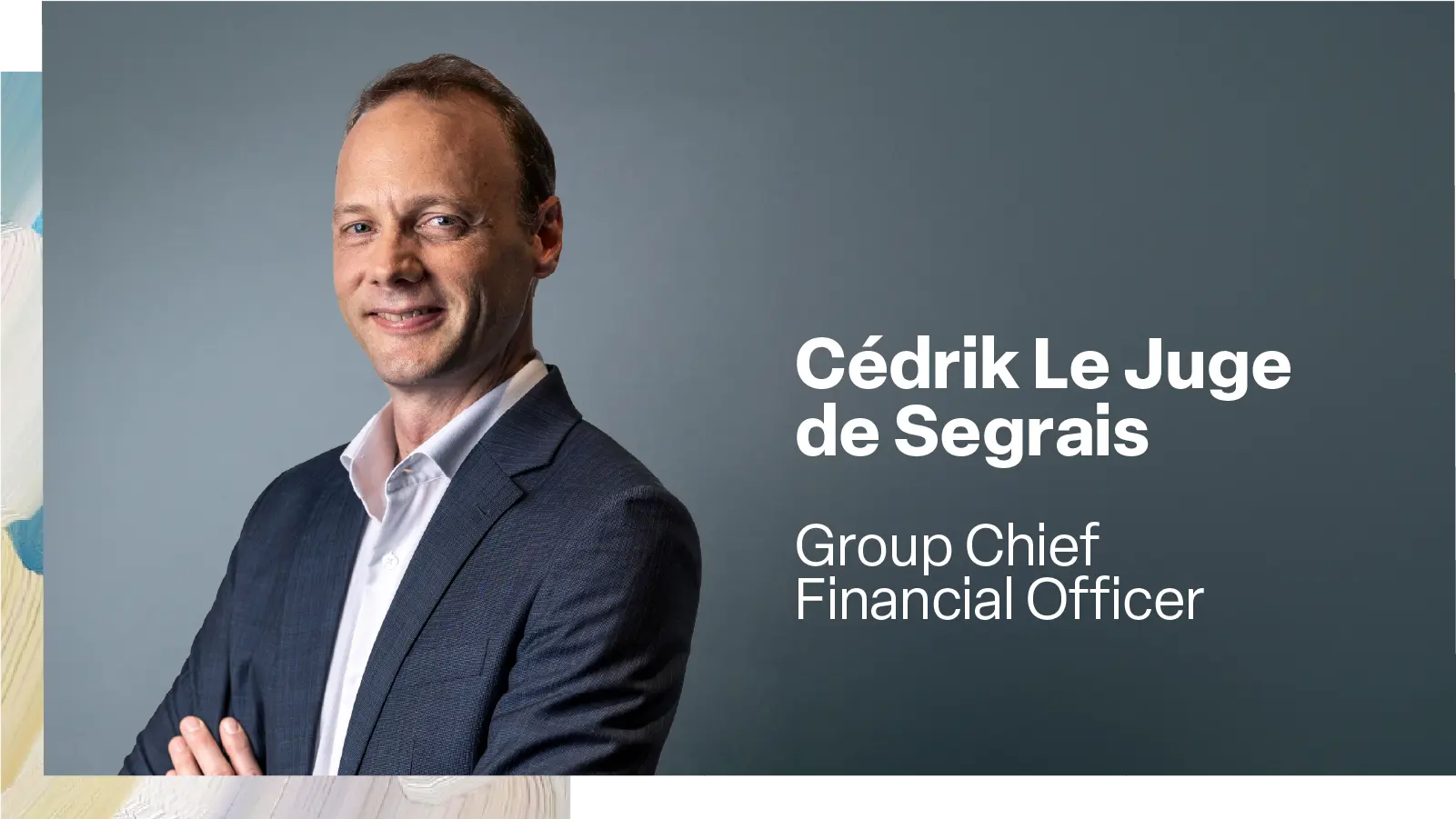
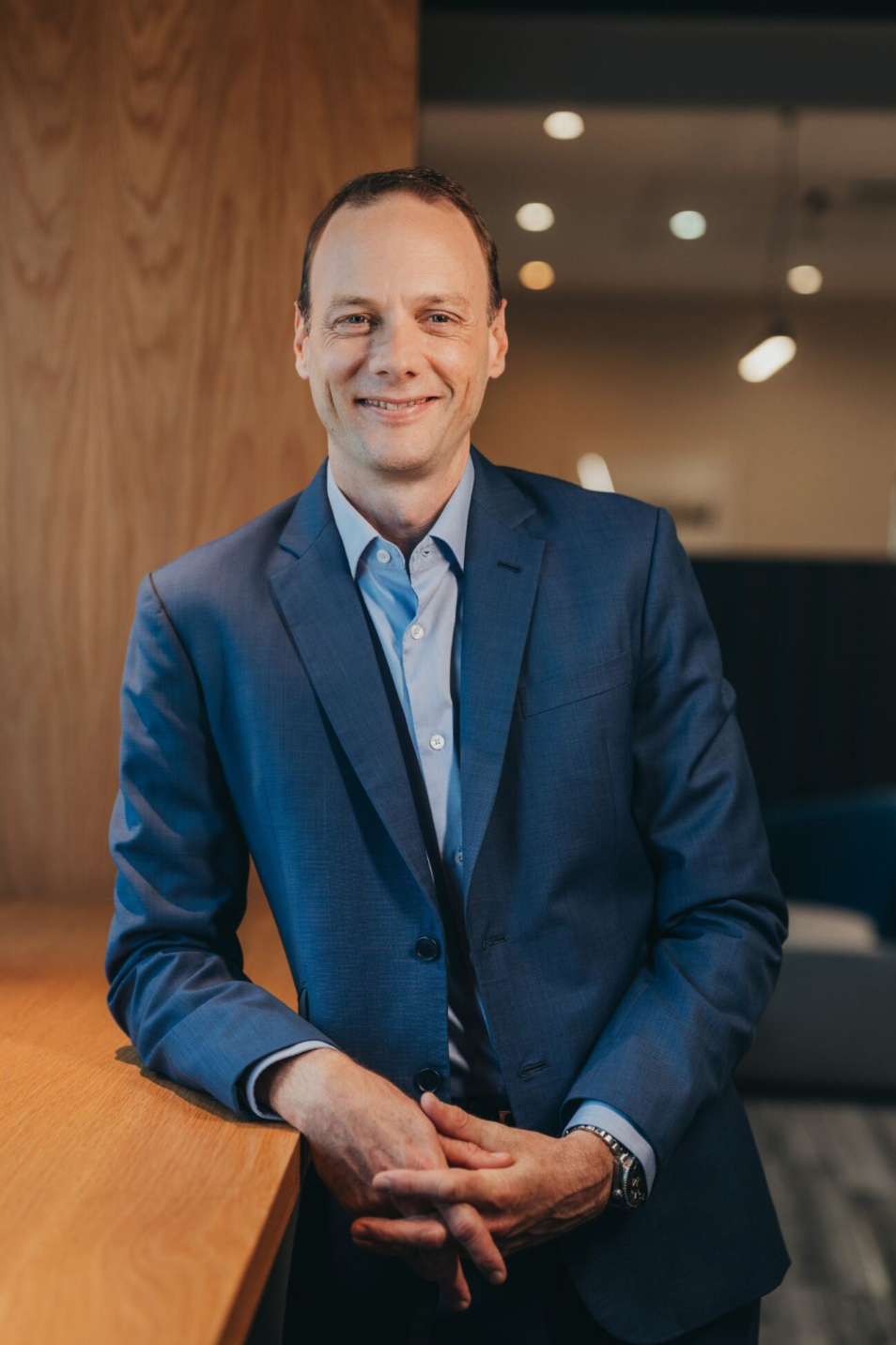
IBL Ltd has entered a new phase of its “Beyond Borders” strategy, with more than half of its revenue now generated outside Mauritius. Yet, as Group CFO Cédrik Le Juge explains, Mauritius remains the anchor of the Group’s operations, employing nearly 20,000 people locally and continuing to drive investment across retail, energy, healthcare, and hospitality.
In this wide-ranging conversation, he reflects on IBL’s disciplined growth model, its resilience against currency volatility and rising costs, and how international expansion strengthens – rather than dilutes – the Group’s commitment to Mauritius
Your “Beyond Borders” strategy is credited with driving a 19% increase in revenue, and stronger diversification. What were the main enablers of success?
The enablers are the clarity of the vision and, thanks to a concerted effort of IBL team members, a disciplined execution to date. Since its launch in 2021, Beyond Borders has been our roadmap for international expansion. The ambition was clear: by 2030, we aimed to grow significantly, positioning ourselves in the top tier of our chosen markets, with 60% of our revenue coming from outside Mauritius. We are well on track – 54% of revenue is already generated abroad, with international activities driving 72% of growth.
But Beyond Borders was never about internationalisation for its own sake. The strategy builds on Mauritius as our foundation, and as Mauritius continues to grow, we are growing alongside it. The strategy reduces IBL’s exposure to any single market, allows us to replicate winning business models, creates regional ecosystems (and therefore economies of scale), as well as captures the structural growth shaping East Africa and the Indian Ocean.
Beyond Borders has taken place in two phases: in Phase 1, we made disciplined acquisitions in sectors where we have proven expertise. Crucially, we have partnered with local players with a strong understanding of each market, allowing us to adapt our business models to local realities, in line with our philosophy of being “local, internationally.”
We are now entering a second phase of integration. The focus is on strengthening synergies across businesses and improving the performance of recent acquisitions, exiting non-core activities to rationalise our portfolio, and consolidating our leadership positions in each market. Above all, we are investing in people – making sure we have the right talent in place and supporting them through training and transformation programmes.
“Beyond Borders was never about internationalisation for its own sake. The strategy builds on Mauritius as our foundation, and as Mauritius continues to grow, we are growing alongside it.
For the first time, more than half of IBL’s revenue came from outside Mauritius. How do you balance growth abroad with maintaining a strong local presence?
Mauritius remains our anchor – it’s where the Group was founded in 1830, where 19,500 of our 40,000 people are based, and where we remain one of the largest contributors to public finances, with Rs 7.4 billion in net taxes paid last year. We continue to invest locally, from Winners’ careful expansion and ongoing renovation of its outlets to renewable energy projects that contribute to Mauritius’ energy autonomy and resilience, or our continued investment in LUX* properties across the island.
At the same time, our international growth allows us to diversify our risk across currencies, jurisdictions and sectors, strengthening our portfolio now and for the long term. Our growth also creates opportunities for internal mobility, for best practices to be shared across the Group, and for our Mauritian and international talent to learn from one another. With 37% of revenue now coming from East Africa and 15% from the Indian Ocean region, we are building a regional ecosystem that strongly complements our Mauritian base. In other words, the stronger we are abroad, the more we can do at home.
Operating profit grew by 36% to Rs 7.4 billion despite pressure from currency volatility and higher costs. What were the key drivers behind this resilience?
First and foremost, this resilience reflects the efforts of our people. Across the Group, our teams have shown an ability to adapt quickly, deliver operational excellence, and stay disciplined under pressure. Their commitment has been central to achieving these results.
Building on that, retail was a standout performer, with Naivas in Kenya delivering strong growth and Run Market in Réunion reaching positive EBITDA. Within retail alone, operating profit nearly doubled year-on-year, rising from Rs 1.1 billion to Rs 2.0 billion, alongside a 19% increase in turnover. Second, our diversification acts as a buffer: strong performances in some sectors balance out more challenging conditions in others. That’s the key strength of our Beyond Borders strategy. Similarly, having export businesses and operations across different currencies helps us better manage currency volatility. We are also starting to see the benefits of integration and economies of scale, with margins improving thanks to supply chain and operational efficiencies in each of our clusters.
Third, financial discipline ensured that these gains translated into earnings after excluding non-recurring items. While reported profit for the year was 11% lower, excluding non-recurring items, underlying profit for continued activities was up 69%, a significant and encouraging improvement. The underlying picture is clear: our businesses are delivering strong, broad-based growth, demonstrating the quality and resilience of their operating performance.
Can you elaborate on the decision to partially divest from AfrAsia, and how this supports your long-term financial strategy?
Our decision was about creating value and sharpening focus. Banking is a highly regulated sector, and AfrAsia has been a remarkable success story. But it is not a model we could easily replicate in other jurisdictions. By selling a majority of our stake to Access Bank UK for USD 117 million, we freed up capital to reinvest in IBL’s core operating engines – the businesses where we have scale, expertise, and strong growth potential – while also reinforcing our balance sheet.
“By selling a majority of our stake to Access Bank UK for USD 117 million, we freed up capital to reinvest in IBL’s core operating engines
At the same time, we deliberately retained a meaningful shareholding of 7.9%. This reflects both our confidence in AfrAsia’s future and our belief that Access Bank UK is the right partner to take it to the next level. In this way, we remain part of AfrAsia’s journey while redeploying capital to accelerate IBL’s broader long-term ambitions.
How do you see the cost structure in Mauritius evolving, particularly with rising wages, and what mitigating actions are in place?
Over the past year, wage increases have been felt across many sectors, with the impact most visible in retail and industrial activities, where statutory adjustments flow quickly to the cost base. At Winners, for example, profitability came under pressure despite higher volumes, while Manser Saxon faced challenges on long-term contracts.
Our response is twofold. First, we are investing in productivity and efficiency – giving our teams the right tools, training, and, where it makes sense, selective automation that frees them to focus on higher-value work. Second, we keep a close eye on fixed costs to navigate volatile conditions and protect our margins. At the end of the day, higher wages are part of a changing environment, and our role is to turn that into an opportunity: supporting our people to be more effective, and ensuring our businesses remain competitive, resilient, and able to keep growing sustainably
What was the objective behind the reorganisation into four clusters – Retail, Consumer Brands & Distribution, Industrials, and Services?
The reorganisation has made our reporting more relevant and transparent. By aligning disclosures with IBL’s main revenue and profit engines, stakeholders now get a clearer and more proportional view of performance, with the right focus on the Group’s “needle movers.”
By grouping businesses with similar strategies, end-markets, and operating models, we’re also better able to align strategy and management decisions internally, while enhancing our ability to monitor and report performance. All in all, the simplified structure makes it easier to understand IBL’s activities and better reflects our ambition to be a leading regional player with strong performance engines balanced across different geographies.
Integration of acquisitions and digitalisation are described as crucial. Could you give specific examples of how these have improved performance?
Acquiring a business is only the first step in creating long-term value for all our stakeholders. Our operational teams dedicate a huge amount of effort, time and resources to creating value post-transaction. A good example is the regional integration of our Healthcare Distribution business, where a highly integrated management team across Kenya and Mauritius is driving impactful and coordinated transformation projects that lay the foundation for sustainable, long-term growth.
Another is the sharing of best practices across our Retail cluster. While we operate in three countries with distinct, fully empowered local management teams, significant synergies are being unlocked thanks to group-wide initiatives such as loyalty programs, purchasing and category management, among others. Of course, having the right digital tools is a crucial aspect of this integration. At IBL, we are lucky to have highly talented teams that are able to deploy advanced tools and AI solutions across clusters and territories.
Productivity and efficiency are recurring themes.What are the most challenging aspects of implementing these measures across the region?
Driving productivity and efficiency across different territories is not without its challenges. The first is the diversity of contexts: each market has its own regulatory, fiscal, and economic environment, which means that there is no onesize-fits-all solution. This is why we rely on strong local Heads of Operations who truly understand their markets and can adapt Group principles to local realities. That is the core of our philosophy of being “local, internationally.”
Another important aspect, as we grow in different geographies, is aligning teams from diverse cultural and managerial backgrounds around a common vision, while continuing to attract and develop the right talent. This remains a constant priority for IBL. Our GREAT Academy has been instrumental in this regard, equipping our people with the tools, insights, and processes to structure and scale excellence across all clusters and countries. On the operational side, implementing digital tools and transformation programmes across geographies requires investment, discipline, and patience. It is about having a mindset of sustainable, efficient execution.
Ultimately, the real challenge is achieving consistency in excellence across the Group, while avoiding over-centralisation. The key is to support our businesses with Group-level toolkits and standards, while giving them the flexibility to create business models adapted to their local markets.
Naivas expanded to 108 stores, Winners grew volumes but faced cost pressures, and Run Market reached positive EBITDA. How do you see the evolution of retail in Mauritius versus East Africa?
Retail remains a major driver of revenue, cashflow, and returns across all our markets, but the dynamics in each country differ significantly. In East Africa, growth is underpinned by structural factors – a large, growing and increasingly urban population, rising GDP, and an emerging middle class. In Kenya, the market favours rapid expansion despite intense competition. Naivas has therefore seen very rapid growth over the past eight years, opening seven new outlets in the 2024-25 financial year alone, while maintaining stable margins despite rising costs.
In Mauritius, the retail market is more mature, with intense price competition and wage pressures. Each new store represents a significant investment, so our focus is on operational excellence and selective expansion rather than simply adding footprint. Winners continues to grow cautiously, modernising its stores and staying close to evolving consumer expectations. We are still finding attractive opportunities: less than two weeks ago, we opened a new Winners at Orchard Centre, with several more in the pipeline. Our expertise across both hypermarkets and supermarkets gives us the flexibility to adapt the model to each opportunity.
In Réunion, the context is different again. Run Market is a truly remarkable turnaround story in the making. In only two years, it has gone from making significant losses to posting positive EBITDA for the first time under our ownership. The team has delivered an outstanding performance, supported by stronger procurement practices, tighter cost control, and more disciplined instore execution. This is a strong signal that the playbook we apply across the Group is effective, even in more challenging markets.
Phoenix Beverages expanded regionally with Seychelles Breweries. What is the long-term vision for your beverage segment?
Phoenix Beverages is one of our flagship businesses in Mauritius, and it will remain so. The regional growth we are pursuing – with Edena in Réunion, Kenyan Originals in Nairobi, and now a majority stake in SeyBrew in the Seychelles – builds on that strong base. We are taking the expertise and reputation earned here into new markets, which in turn strengthens the Group and creates capacity to keep investing at home. To sustain this growth, we have consistently invested in our operations – from high-performance bottling lines to extended distribution networks and upgraded systems. Coca-Cola’s recent decision to entrust Edena with bottling and distributing its products in Réunion from 2026, after decades with its historical partner Heineken, is a strong vote of confidence in PhoenixBev’s capabilities.
UBP and CNOI delivered strong results, while Seafood and Agro faced headwinds. What corrective actions or strategies are being prioritised here?
IBL’s Industrials cluster delivered revenue of about Rs 19.3 billion and operating profit of Rs 1.4 billion, with performances varying across activities. UBP benefited from steady demand in Mauritius and from the successful integration of Bazalt in Réunion, which has become a strong contributor. CNOI also had a very good year, with more billable hours in ship repair and new orders in shipbuilding.
Other activities faced a more challenging context.
Manser Saxon was affected by project delays and wage cost pressures, which weighed on results. In our Seafood activities, raw material shortages and higher labour costs put margins under pressure, alongside a transition at Princes Tuna following a change in controlling shareholder. Our Agro activities also saw reduced profitability with lower sugar prices and smaller harvest volumes, partly offset by property gains. In these more cyclical businesses, our response is on stabilisation and resilience: empowering our talent to pursue growth and margin improvement opportunities and make selective value-accretive capital investments. The objective is to rebuild margins and keep the portfolio resilient across the cycle.
With healthcare assets such as Life Together and Nouvelle Clinique Bon Pasteur, how does IBL position itself in the fast-evolving health sector?
Life Together, which recently acquired Nouvelle Clinique Bon Pasteur, is building a proximity care platform that offers accessible, quality healthcare while staying financially sustainable. Each of our three clinics has a clear role: Bon Pasteur is being modernised into a community hospital with intensive care and maternity services; Forbach is focused on ambulatory surgery and everyday emergencies; and Tamarin is developing as a reference centre for the West. Beyond our clinics, we also offer diagnostics, paramedical services and home care, making healthcare more integrated and patient centered.
Rising labour costs and currency depreciation are highlighted as key risks. How confident are you in IBL’s ability to sustain growth under these pressures?
These pressures are real, but they also highlight the strength of IBL’s model. Rising wages have already tested our resilience in Mauritius, and we have shown that we can adapt. IBL’s response is to remain disciplined on what we can control. The Group diversifies across sectors and geographies, insists on productivity and procurement discipline, and manages our funding conservatively
Currency effects are mitigated through natural hedges in our portfolio, given our significant presence in the region and the strength of our export businesses, as well as prudent treasury management. Most importantly, we continue to engage constructively with suppliers, customers and public institutions, because competitiveness and resilience must be built together.
Which regions or sectors will be the main focus of your investment pipeline in the next three to five years?
Building on our strong momentum in recent years, IBL will remain selective and prudent in its investment approach, concentrating on areas where we already have momentum and capability, with a clear focus on organic growth. Organic expansion will be a priority, supported by the strength of our existing platforms. Several of our businesses are already moving beyond Mauritius – BrandActiv and Bloomage, for instance – leveraging the expertise and ecosystems developed at home to succeed abroad.
At the same time, Mauritius remains our core market, and we continue to invest across all four clusters here. Our long-term ambition is to generate more than 60% of revenues internationally by 2030, with a focus on East Africa and the Indian Ocean region, while continuing to play a leading role in Mauritius.
This balance is deliberate and strategic: growth abroad creates the scale and financial strength that allows us to reinvest in Mauritius. In other words, our international journey is, in so many ways, powered by Mauritius – and in turn, it gives us the means to keep building here at home.
How do you intend to leverage digitalisation,innovation, and human capital to ensure longterm competitiveness?
In retail and distribution, better use of data, loyalty analytics and AI-assisted planning is already improving category management, pricing and supplier partnerships. Shared platforms reduce costs and speed up processes without removing local decision-making.
But technology alone is not enough – people are at the centre of our strategy. Through the GREAT Academy, we are preparing the next generation of leaders to take on bigger responsibilities across markets. The IBL Excellence and Innovation Awards encourage fresh ideas directly linked to customers and operations, giving our teams the confidence to shape the future of their businesses.
Finally, the Responsible Business Summit, initiated by IBL and co-organised with several other Mauritian groups, is intended as a space for collaboration on sustainability and competitiveness. In the end, our long-term success comes from combining technology, talent, and partnerships to build businesses that are not only profitable, but also purposeful and respected.