The invisible engine
What it takes to operate at the intersection of global trade and regional ambition
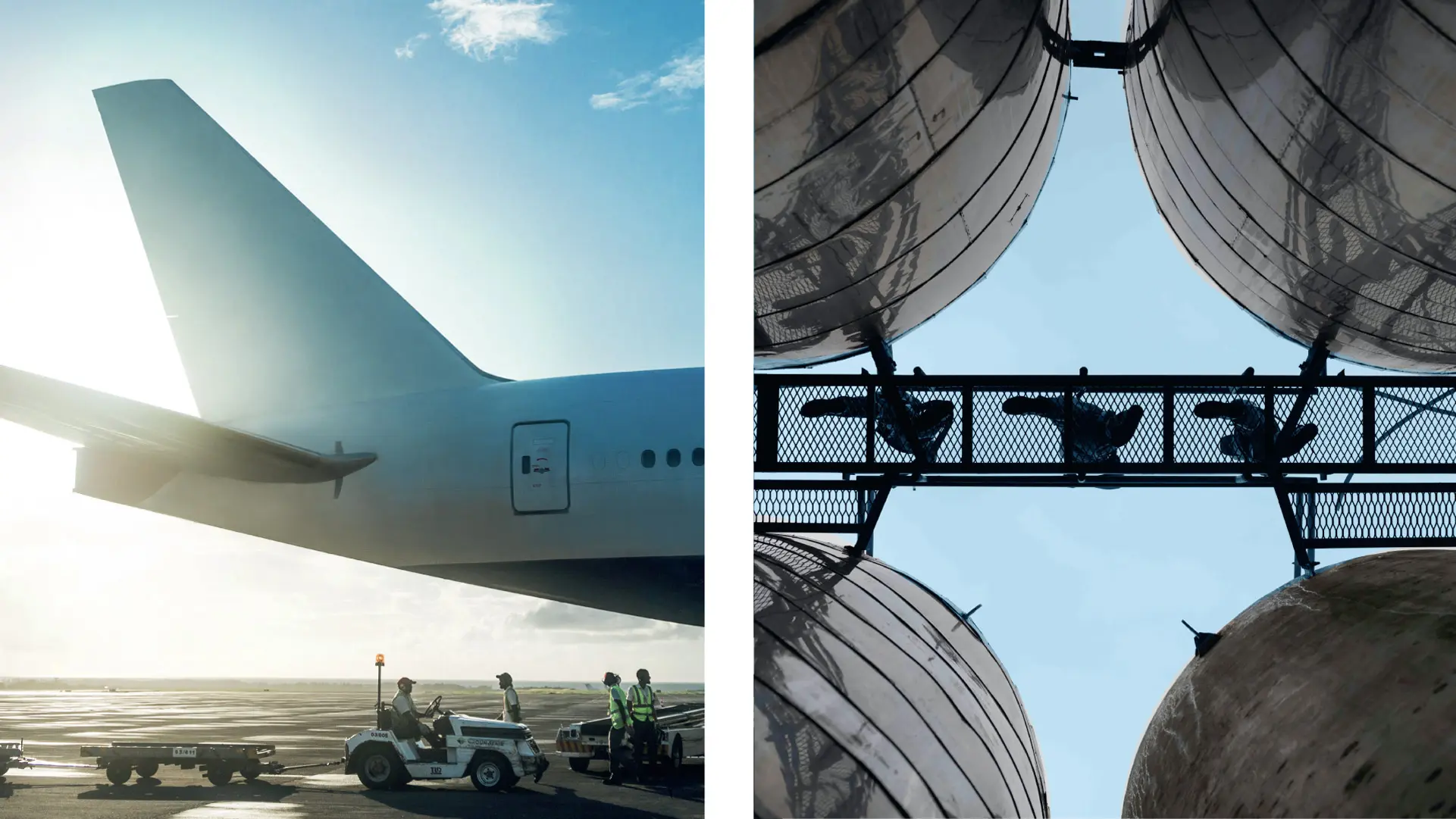
Behind many of the things that make daily life and business possible, there is a layer of work most people never see. The imported machinery that arrives on time. The aircraft that departs as scheduled. The cargo hold loaded in the right sequence, at the right temperature, bound for the right destination. None of it happens by accident. It is made possible, daily, by people most of us will never meet. Within IBL’s Services cluster, the Logistics, Aviation and Shipping segment (LAS) is precisely this kind of operation. Essential, complex, and often invisible.

A world in motion, under pressure
According to IATA, USD 8 trillion worth of goods are transported by air cargo annually. That’s approximately 33% of world trade by value, but less than 1% by volume. That extraordinary ratio tells you everything about the nature of what moves by air: high-value, time-critical, often difficult to replace. The COVID-19 pandemic exposed the fragility of supply chains in ways that have permanently altered how businesses think about resilience. Since then, instability in the Middle East has added further pressure.
An end-to-end role
LAS operates across freight forwarding, warehousing, distribution, air connectivity, and maritime services, forming an end-to-end supply chain offering with solutions a standalone operator would find difficult to replicate. “Cross-cluster collaboration accelerates decision-making, reduces duplication, and ensures better alignment with the Group’s overall strategy,” explains Yannis Fayd’herbe, COO of IBL Logistics.
But the model is only as strong as the thinking behind it. As supply chains become more complex and disruptions more frequent, LAS is deliberately strengthening the way it anticipates and responds: better data, stronger forecasting, standardised processes, and digital tools. “The more we invest in digital capabilities, the more we free our people to focus on innovation and operational excellence rather than crisis management. That shift is fundamental to where we’re taking this business,” adds Yannis.
Mauritius, a strategic crossroads
Mauritius sits on the natural maritime corridor connecting the ports and manufacturing centres of Asia to the resource-rich regions of Africa and the markets of the Atlantic. A highway that carries over one-third of the world’s bulk cargo traffic and two-thirds of its oil shipments. That highway is now under growing pressure. The Red Sea crisis and disruptions around the Strait of Hormuz have simultaneously affected two of the world’s most critical maritime chokepoints. The IMF recorded a 74% surge in trade volume rerouting via the Cape of Good Hope, pushing thousands of additional vessels directly past Mauritius.
On aviation, Mauritius boasts direct connections to nine out of the 15 largest aviation hubs worldwide. On trade, a web of regional blocs and bilateral agreements provides preferential market access to nearly 70% of the world’s population. The geographic and commercial case for Mauritius as a regional logistics hub is, on paper, strong. The question is who moves fast enough to make it real.
The regional ambition
LAS has a clear objective. Built around three pillars – innovation , excellence, and talent – the cluster is positioning itself not as a transporter of goods, but as a strategic partner for businesses navigating complex, multi-geography supply chains. The vision is for Mauritius to function as a stronger connector in the emerging architecture of Indian Ocean and African trade, with LAS helping to make that connectivity commercially viable.
“Getting there requires more than ambition,” says Yannis. “It requires investment, talent development, and operational discipline.”
The people behind the machine
Behind the systems and the strategy are the people: logistics coordinators, aviation specialists, warehouse teams, supply chain analysts, and many more. Professionals operating in a 24/7 environment where the margin for error is narrow and the stakes are consistently high. As the sector evolves, investing in human capital is as strategic as any infrastructure investment. “A forward-looking mindset, especially around sustainability and innovation, is becoming a key differentiator,” concludes Yannis.
Most people will never see this work. They will simply benefit from it: in the products on their shelves, the flights that connect them, the supply chains that keep businesses and economies moving.
That invisibility is not a limitation. For LAS, it is often the measure of a job well done.